

Sahin Lab
Model Systems
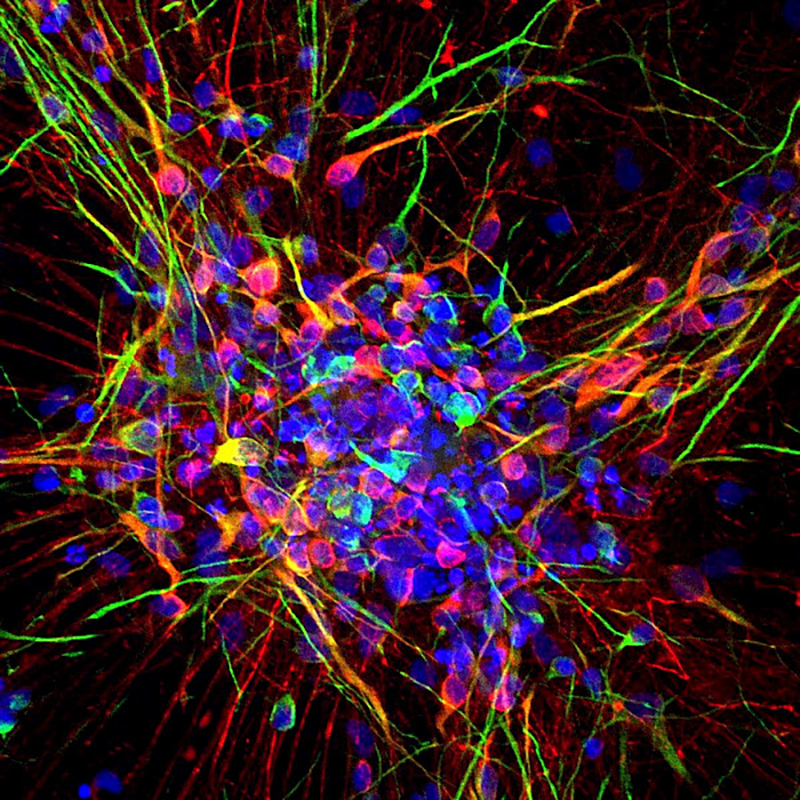
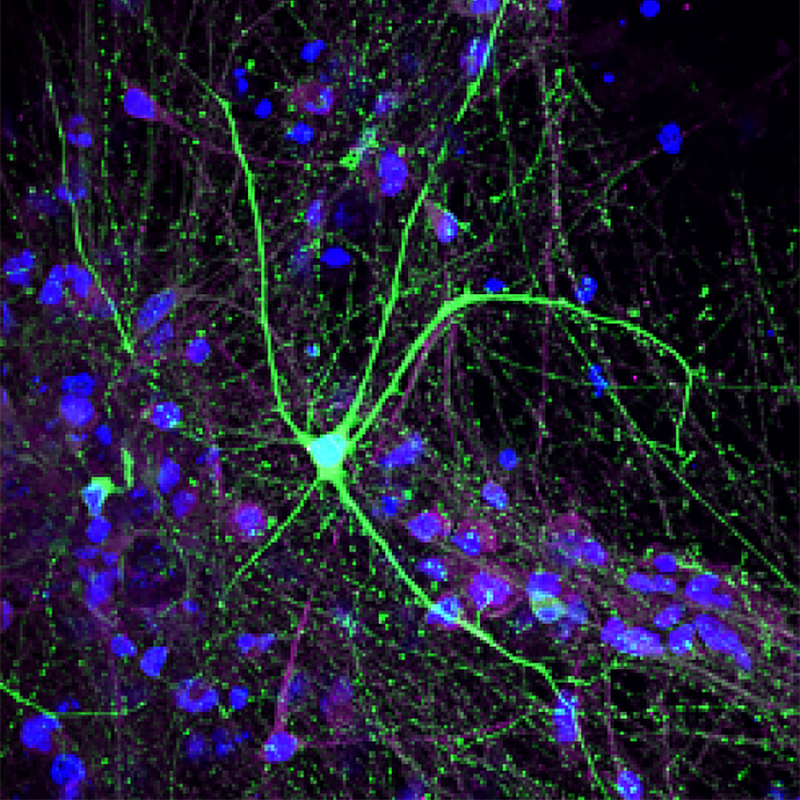
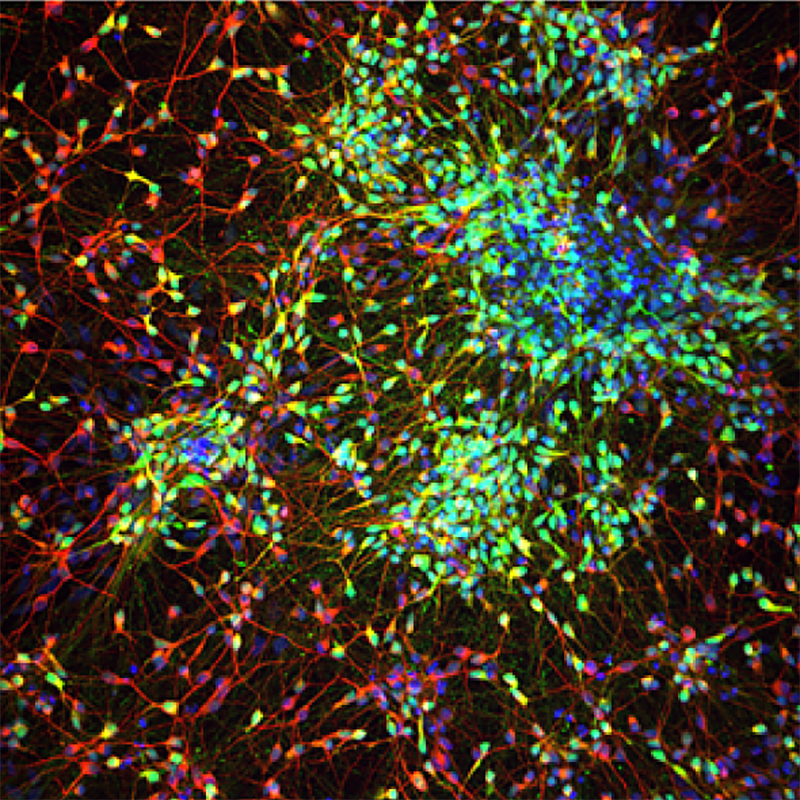
On the basic and translational fronts of the lab, we pursue four complementary lines of research focused on disease mechanisms underlying tuberous sclerosis complex (TSC) and related neurodevelopmental disorders. We use mouse models, stem cell-derived neurons, and patient-derived brain tissue obtained during surgical resections to address these questions:
Cellular pathology of TSC within neurons:
At the cellular level, we investigate the effects of TSC1/2 loss on translation, transcription, epigenetic regulation, and metabolic processes such as autophagy and mitochondrial function in neurons. We have identified structural deficits, including axonal and ciliary abnormalities. We are particularly interested in when and how TSC-associated pathophysiology becomes resistant to mTOR inhibitors (mTORi).
Non-cell-autonomous effects of TSC1/2 loss:
Loss of TSC1/2 in neurons affects neighboring cells in a non-cell-autonomous manner. A striking example is the interaction between TSC-deficient neurons and oligodendrocytes, which results in hypomyelination. We aim to better understand neuron–glia interactions, as well as interactions between TSC-null and TSC-heterozygous neurons.
Development of novel therapeutics:
Because many individuals with TSC continue to experience refractory seizures and neurodevelopmental and neuropsychiatric symptoms (TSC-associated neuropsychiatric disorders, TAND), we are exploring new treatment options using in vitro structural and functional screens and in vivo assays such as electroencephalography (EEG).
Comparative pathobiology of neurogenetic disorders:
Growing evidence suggests that diverse causes of autism and epilepsy may converge on shared mechanisms at the cellular or circuit level. Building on this observation and our parallel clinical studies, we investigate other neurodevelopmental disorders, including those involving PTEN, DEPDC5, CDKL5, SSADH, and KCNQ2, as well as the 16p11.2 deletion. Our ultimate goal is to identify therapeutic strategies for one disorder that may translate to related conditions.